통합 검색

통합 검색

Papers for 2022~2023


We pursue valuable research and continuously publish papers. Through these publications both large and small

we solve problems and contribute to the preservation of people, the environment, and the planet. 

  Surfaces and Interfaces

   November 2022  vol 34 : 102362 


“Bottom-up evolution of consolidated porous diamond layer

  by hot-filament-CVD”


   Jung-Min Cho, Hak-Joo Lee, Young-Jin Ko, Heon-Jin Choi, Young-Joon Baik, Gyu Weon Hwang,

   JongKeuk Park, Joon Young Kwak, Jaewook Kim, Jongkil Park, YeonJoo Jeong, Inho Kim,

   Kyeong-Seok Lee, Wook-Seong Lee.

    Abstract

    Synthesis of the porous chemical vapor deposition (CVD) diamond layer, which might enable many noble

     applications, usually employed the template growth or post-processing, which accompanied the undesirable

     complexity and cost issues. In a small number of the porous diamond layer synthesis efforts, majority of them

     employed the plasma-assisted CVD (PA-CVD), while the hot-filament CVD (HF-CVD) was well known for its

     outstanding scalability and cost-effectiveness. Here we demonstrate a post-processing/template-free approach

     for the porous diamond layer synthesis by HF-CVD Intriguingly, we found that the seeding the substrate... ...


  Applied Physics Letters

  October 2022  vol 121 : 161101 


“Fabrication of thermally stable mid-infrared optical filters

  using tantalum microdisc array”


   Hwa-Seub Lee, Jung-Suk Cha, Jun-Young Jin, Young-Jin Ko, Tae-Yeon Seong.

  Abstract
   To fabricate a thermally stable optical filter in the mid-infrared (MIR) region, a plasmonic metal disk array (PMDA)
   using tantalum (Ta) was proposed, and the filter performance was compared with that of conventional
   silver (Ag)-based PMDAs. A finite-difference time-domain method was utilized to systematically analyze the effects
   of geometric configuration and constituent materials on the optical properties of PMDA filters with a periodic
   hexagonal lattice. Unlike the Ag PMDA filters, whose transmission dip at resonance wavelengths gradually
   decreased with increasing temperature, the Ta PMDA filters revealed almost the same transmission spectra even
   after annealing at 700 °C for 30 min. The Ta-based MIR PMDA filter exhibited similar optical properties to those of
   the Ag PMDA. The PMDAs with a duty cycle (d.c.) of 60% exhibited stop band spectra with sufficiently deep dip
   and wide linewidth.... ...

  Journal of Energy Chemistry

   Feb 2023  vol 77 : 54-61 


“Unveiling the role of Ni in Ru-Ni oxide for oxygen evolution:

  Lattice oxygen participation enhanced by structural distortion”


   Young-Jin Ko, Man Ho Han, Chulwan Lim, Seung-Ho Yu, Chang Hyuck Choi, Byoung Koun Min,

   JaeYoung Choi, Woong Hee Lee, Hyung-Suk Oh.

  Abstract
   Introducing Ni in Ru oxide is a promising approach to enhance the catalytic activity for the oxygen evolution
   reaction (OER). However, the role of Ni (which has a poor intrinsic activity) is not fully understood. Here, a RuNiOx
   electrode fabricated via a modified dip coating method exhibited excellent OER performance in acidic media, and
   neutral media for CO₂ reduction reaction. We combined in-situ/operando X-ray absorption near-edge structure
   and on-line inductively coupled plasma mass spectrometry studies to unveil the role of the Ni introduced in the
   Ru oxide. We propose that the Ni not only transforms the electronic structure of the Ru oxide, but also produces a
   large number of oxygen vacancies by distorting the oxygen lattice structure at low overpotentials, increasing the
   participation of lattice oxygen for OER. This work demonstrates the real behavior of bimetallic oxide materials
   under applied potentials and provides new insights into the development of efficient electrocatalysts... ...

  Journal of Materials Chemistry A

   October 2022  vol 110 :  23760-23769 


“Synergistic CuPd bimetallic electrocatalyst for ammonia

  production from electrochemical nitrate reaction”


    Wonsang Jung, Jaewoo Jeong, Younghyun Chae, Woong Hee Lee, Young-Jin Ko, Keun Hwa Chae,

    Hyungsuk Oh, Ung Lee, Dong Ki Lee, Byoung Koun Min, Hyeyoung Shin, Yun Jeong Hwang.

    Abstract
    The electrochemical nitrate reduction reaction (eNO3RRs) can produce value-added chemicals such as ammonia        (NH3) via multiple steps. Here, we demonstrate that bimetallic Cu–Pd–Ox alloy electrocatalysts can promote
     selective NH3 production from the eNO3RR, especially at low overpotential, by accelerating the rate-determining       hydrogenation of NO₂−, a critical intermediate, on the Cu catalyst. The synergistic effect of Cu and Pd affords 14
     times higher NH3 yield (1.41 mg h−1 cm−2) at −0.2 VRHE with an optimum composition (Cu0.65Pd0.35Ox) than
     that obtained using bare CuOx. The operando near edge X-ray absorption fine structure (NEXAFS) and simulation       results support that the high hydrogen affinity of Pd facilitates sequential hydrogenation on metallic Cu active
     sites, consequently increasing the NH3 selectivity and production rate... ...

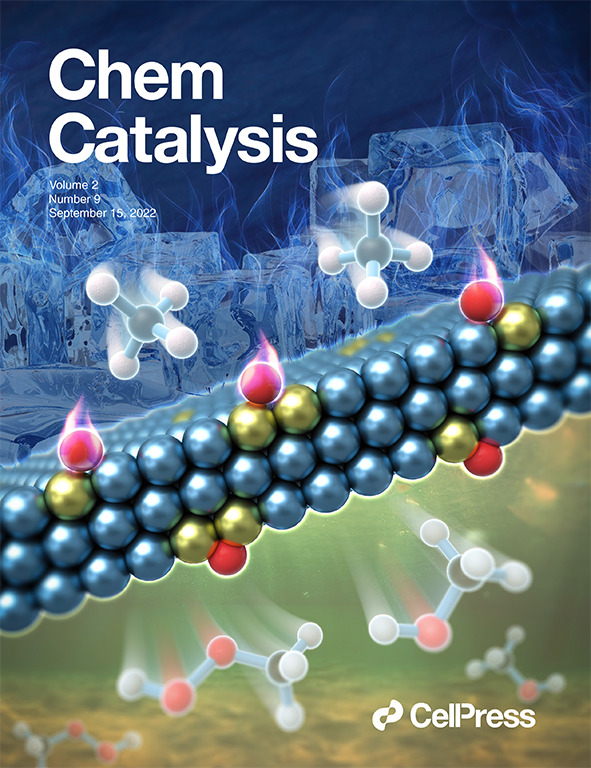
  Chem Catalysis

   September 2022  vol 2 : 2312-2327


“Unraveling Ni-Fe 2D nanostructure with enhanced oxygen

  evolution via in situ and operando spectroscopies”


   Young-Jin Ko, Man Ho Han, Haesol Kim, Jun-Yong Kim, Woong Hee Lee, Jaewook Kim,

   Joon Young Kwak, Chang-Hee Kim, Tae-Eon Park, Seung-Ho Yu, Wook-Seong Lee,

   Chang Hyuck Choi, Peter Strasser, Hyung-Suk Oh.

   Abstract
   Ni-Fe-based materials are well known as one of the most active electrocatalysts for the oxygen evolution reactio
   (OER) in alkaline environments. In this study, we propose a facile and scaling up synthesis route using a surfactant     for Ni-Fe 2D nanostructured electrocatalysts. Furthermore, we uncovered the hidden phase transformation
   mechanism of 2D Ni-Fe layered double hydroxide (LDH) electrocatalysts by combining various in situ and
   operando analyses. The Ni-Fe LDH underwent a chemically induced phase transformation in an alkaline
   environment without applied potential. The resulting phase transformation product persisted throughout the
   entire OER mechanism cycle, such that it played a dominant role in the process... ...

  Journal of Alloys and Compounds

  July 2022  vol 910 : 164895


“Improved performance of deep ultraviolet AlGaN-based

  light-emitting diode by reducing contact resistance of Al-based    reflector”


   Kee-Baek Sim, Jun-Young Jin, Su-Kyung Kim, Young-Jin Ko, Gyu Weon Hwang, Tae-Yeon Seong,

   Hiroshi Amano.
   Abstract
   In this study, chlorine (Cl) treatment was carried out on p-AlGaN to enhance the performance of ultraviolet-C light     emitting diodes (UVC LEDs) by modifying ITO work function and hence reducing the contact resistance of ITO/Al
   reflector. The Cl-treated UVC LEDs exhibit the forward voltage of 6.88 V at 20 mA, whereas the reference samples
   show 7.50 V. The light output power and relative wall plug efficiency (WPE) of the Cl-treated UVC LEDs are
   enhanced by 17.1% at 500 mW and 19.5% at 100 mA, respectively, as compared to the reference. Additionally, the
   Cl-treated LEDs also display reduction in both the leakage current and ideality factor... ...

  Electrochemistry Communications

   June 2022  vol 139 : 107301 (co-first author)


“Unraveling the role of introduced W in oxidation tolerance for

  Pt-based catalysts via on-line inductive coupled plasma-mass

  spectrometry”


   Man Ho Han, Young-Jin Ko, Byoung Koun Min, Seung-Ho Yu, Chang Hyuck Choi, Jae-Young Choi,

   Woong Hee Lee, Hyung-Suk Oh.

   Abstract
   In this study, chlorine (Cl) treatment was carried out on p-AlGaN to enhance the performance of ultraviolet-C light     emitting diodes (UVC LEDs) by modifying ITO work function and hence reducing the contact resistance of ITO/Al
   reflector. The Cl-treated UVC LEDs exhibit the forward voltage of 6.88 V at 20 mA, whereas the reference samples
   show 7.50 V. The light output power and relative wall plug efficiency (WPE) of the Cl-treated UVC LEDs are
   enhanced by 17.1% at 500 mW and 19.5% at 100 mA, respectively, as compared to the reference. Additionally, the
   Cl-treated LEDs also display reduction in both the leakage current and ideality factor. Further,
   the photoluminescence (PL) intensity of AlGaN micro-disks is also enhanced by the Cl-treatment... ...

  Nature Communications

  April 2022  vol 13 : 1-9 (first & corresponding author) 


“Exploring dopant effects in stannic oxide nanoparticles for CO₂    electro-reduction to formate”


   Young-Jin Ko, Jun-Yong Kim, Woong Hee Lee, Min Gyu Kim, Tae-Yeon Seong, Jongkil Park,

   YeonJoo Jeong, Byoung Koun Min, Wook-Seong Lee, Dong Ki Lee, Hyung-Suk Oh.

   Abstract
   The electrosynthesis of formate from CO₂ can mitigate environmental issues while providing an economically
   valuable product. Although stannic oxide is a good catalytic material for formate production, a metallic phase is
   formed under high reduction overpotentials, reducing its activity. Here, using a fluorine-doped tin oxide catalyst,
   a high Faradaic efficiency for formate (95% at 100 mA cm−2) and a maximum partial current density of 330 mA cm
   −2 (at 400 mA cm−2) is achieved for the electroreduction of CO₂. Furthermore, the formate selectivity (≈90%) is
   nearly constant over 7 days of operation at a current density of 100 mA cm−2. In-situ/operando spectroscopies
   reveal that the fluorine dopant plays a critical role in maintaining the high oxidation state of Sn, leading to
   enhanced durability at high current densities. First-principle calculation also suggests that... ...

  Applied Catalysis B: Environmental

   April 2022  vol 303 : 120884


“Peroxide activation by microbially synthesized sulfidated iron:    Comparison against abiotic iron-based materials in terms of

  treatment efficiency and oxidative degradation pathway”


   Bowen Yang, Sae-In Suh, Jeonggil Lee, Hwa-Soo Ryoo, So-Young Ham, Jaesung Kim, Young-Jin Ko,

   Heesoo Woo, Jaemin Choi, Hyung-Suk Oh, Sang-Hoon Lee, Hee-Deung Park, Man Jae Kwon,

   Hongshin Lee, Jaesang Lee.

   Abstract
   This study demonstrated the application of biogenic sulfidated iron (B-FeS), produced via anaerobic digestion of
   Desulfovibrio desulfuricans using sulfate as the terminal electron acceptor, for peroxide activation. B-FeS was
   assessed against chemically prepared zerovalent and sulfidated iron (ferrous sulfide and pyrite) with respect to
   their ability to activate peroxydisulfate (PDS) and H2O₂. Regardless of the peroxide type, B-FeS outperformed
   benchmark iron activators in treating 4-chlorophenol due to its resistance to iron corrosion and the high content
   of reduced sulfur. The roles of oxidizing radicals were confirmed based on the effects of alcohol-based... ...

  Journal of Power Sources

   15 Feb 2022  vol 521 : 230953 (co-first author) 


“Thermo-selenized stainless steel as an efficient oxygen

  evolution electrode for water splitting and CO₂ electrolysis

  in real water matrices”


   Man Ho Han, Young-Jin Ko, Seung Yeon Lee, Chulwan Lim, Woong Hee Lee, Min Wook Pin,

   Jai Hyun Koh, Jihyun Kim, Woong Kim, Byoung Koun Min, Hyung-Suk Oh.
   Abstract
   Although stainless steel is a promising candidate for oxygen evolution reaction (OER) electrodes, chalcogenization
   is typically necessary to avoid surface passivation. Herein, we modify the surface of SUS304 by selenization under
   mild conditions. The optimal selenization temperature (500 °C) is determined by analyzing the surface morphology
   and elemental distribution. The electrode composition and the role of Se in improving OER activity are clarified
   using X-ray photoelectron spectroscopy depth profiling. The electrode selenized at 500 °C is rich in oxygen
   vacancies and had a high Ni content after electrochemical pre-activation. Moreover, the overpotential is only
   284.3 mV at 10 mA cm−2 and no potential degradation occurred over 160 h, indicating excellent stability... ...

  Nature Communications

   01 Feb 2022  vol 13 : 1-10


“Electrode reconstruction strategy for oxygen evolution

  reaction: maintaining Fe-CoOOH phase with intermediate-spin

  state during electrolysis”


   Woong Hee Lee, Man Ho Han, Young-Jin Ko, Byoung Koun Min, Keun Hwa Chae, Hyung-Suk Oh.

   Abstract
   Computational calculations and experimental studies reveal that the CoOOH phase and the intermediate-spin (IS)
   state are the key factors for realizing efficient Co-based electrocatalysts for the oxygen evolution reaction (OER).
   However, according to thermodynamics, general cobalt oxide converts to the CoO₂ phase under OER condition,
   retarding the OER kinetics. Herein, we demonstrate a simple and scalable strategy to fabricate electrodes with
   maintaining Fe-CoOOH phase and an IS state under the OER. The changes of phase and spin states were
   uncovered by combining in-situ/operando X-ray based absorption spectroscopy and Raman spectroscopy.
   Electrochemical reconstruction of chalcogenide treated Co foam affords a highly enlarged active surface that
   conferred excellent catalytic activity and stability in a large-scale water electrolyzer... ...

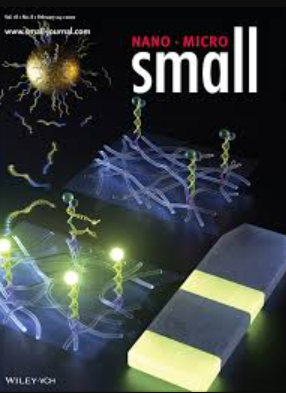
  Small

   24 Feb 2022  vol 18 : 2105087 (co-first author) 


“Bottom–Up Evolution of Diamond–Graphite Hybrid

  Two‐Dimensional Nanostructure: Underlying Picture

  and Electrochemical Activity”


   Jung-Min Cho, Young-Jin Ko, Hak-Joo Lee, Heon-Jin Choi, Young-Joon Baik,

   Jong-Keuk Park, JoonYoung Kwak, Jaewook Kim, Jongkil Park, YeonJoo Jeong, Inho Kim,

   Kyeong-Seok Lee, Wook-Seong Lee.
   Abstract
   The diamond–graphite hybrid thin film with low-dimensional nanostructure (e.g., nitrogen-included
   ultrananocrystalline diamond (N-UNCD) or the alike), has been employed in many impactful breakthrough
   applications. However, the detailed picture behind the bottom–up evolution of such intriguing carbon
   nanostructure is far from clarified yet. Here, the authors clarify it, through the concerted efforts of microscopic,
   physical, and electrochemical analyses for a series of samples synthesized by hot-filament chemical vapor
   deposition using methane–hydrogen precursor gas, based on the hydrogen-dependent surface reconstruction of
   nanodiamond and on the substrate-temperature-dependent variation of the growth species... ...

  Energy& Environmental Science

   22 Mar 2022  vol 15 : 2397-2409 


“Interface rich CuO/Al2CuO4 surface for selective ethylene

  production from electrochemical CO₂ conversion”


   Siraj Sultan, Hojeong Lee, Sojung Park, Minho M Kim, Aram Yoon, Hansaem Choi, Tae-Hoon Kong,

   Young-Jin Ko, Hyung-Suk Oh, Zonghoon Lee, Hyungjun Kim, Wooyul Kim, Youngkook Kwon.

   Abstract
   The electrochemical reduction of carbon dioxide (CO₂) to multicarbon hydrocarbons or oxygenate compounds
    beyond carbon monoxide is of great importance, as it offers a promising way to obtain a renewable fuel of high
    energy density and close the carbon cycle. Copper has been considered the predominant and effective
    electrocatalyst for the CO₂ reduction reaction (CO₂RR), especially when aiming for ethylene products. However,
    the selectivity or current density of most catalysts for ethylene production is not satisfactory at competitive prices.
    Here, we present a newly designed electrocatalyst comprising Al2CuO4 nanosheets uniformly covered with
    CuO nanoparticles (CuAl-1: CuO/Al2CuO4-23) by phase and interphase engineering, achieving an ultrahigh
    selectivity of 82.4% for ethylene in an H-cell system with good catalytic stability and material durability for 100 h.
    In a flow-cell electrolyzer, this catalyst achieves a remarkably high ethylene partial current density of... ...

Contact Us

    Would you like to be partner with us?

    If you or your institution would like to collaborate on a paper or participate in a project, please feel free to contact our office.